

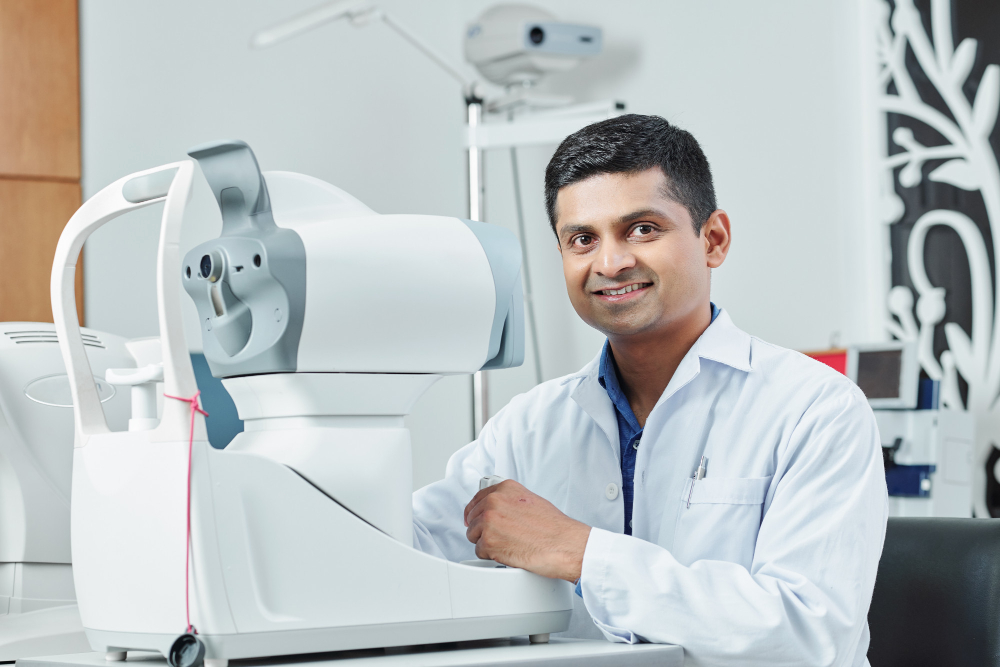
A real-world look at retina treatment in Kolkata, through the lens of one patient’s journey
Table of Contents
The Warning Sign He Almost Ignored
Rohan Sen (name changed for privacy), a 34-year-old software analyst from Salt Lake, thought the flashes of light in his left eye were just screen fatigue. He had been putting in long hours, and floaters seemed like a normal side effect of staring at code all day.
Two weeks later, a dark curtain crept across her vision. That’s when he finally searched for retina treatment in Kolkata, and that search may have saved his eyesight.
The Diagnosis: Retinal Detachment
At a retina clinic in the city, an ophthalmologist ran a dilated eye exam and an OCT (optical coherence tomography) scan. The verdict: a rhegmatogenous retinal detachment, where a tear in the retina lets fluid seep underneath, peeling it away from the back of the eye like wallpaper coming loose.
Left untreated, this condition can cause permanent vision loss within days. Rohan was told he needed surgery, fast.
The Treatment Journey
Kolkata has emerged as a strong hub for advanced retina care, with several centres offering the same technology available in metros like Delhi or Mumbai, often at a fraction of the cost. Rohan’s treatment plan included:
- Pneumatic retinopexy assessment — ruled out due to the size and location of the tear
- Vitrectomy surgery — the vitreous gel was removed and replaced with a gas bubble to press the retina back into place
- Laser photocoagulation — used to seal the retinal tear and prevent future detachment
- Post-op positioning — Ritika had to keep her head in a specific downward position for several days to help the gas bubble do its job
The entire procedure took under an hour, but recovery required patience, nearly three weeks of restricted activity and follow-up visits.
The Results
At his six-week check-up, Rohan’s retina had reattached fully. His vision, initially blurry, sharpened significantly over the following months. Today, he is back to his 10-hour coding shifts, with one big lifestyle change: regular retina screenings every year, non-negotiable.
Key Takeaways for Anyone Searching “Retina Treatment in Kolkata”
- Flashes and floaters are not always harmless. Sudden onset, especially with a “curtain” or shadow in your vision, is an emergency.
- Time is retina. The longer a detachment goes untreated, the lower the chance of full visual recovery.
- Kolkata’s retina care ecosystem has matured — many clinics now offer vitreoretinal surgery, laser treatment, and diabetic retinopathy management with outcomes comparable to larger metro cities.
- Diabetics and high myopes are at higher risk and should prioritise annual dilated eye exams.
When Should You See a Retina Specialist?
Don’t wait for a full-blown emergency. Book a retina consultation if you notice:
- Sudden floaters or flashes of light
- A shadow or curtain over part of your vision
- Blurred or distorted central vision
- A family history of retinal disease or high-degree myopia
Rohan’s story isn’t rare; it’s a reminder that retinal problems often creep in quietly before striking suddenly. If you are experiencing any early warning signs, searching for reliable retina treatment in Kolkata today could be the decision that saves your sight tomorrow.
Have questions about retina health?
Contact Mobile: 033 2527 2527
Mail: info@asmiieye.com
Consult a qualified ophthalmologist for personalised advice.
FAQ:
1. What are the early warning signs of retinal problems?
Sudden floaters, flashes of light, blurred vision, or a shadow/curtain across part of your visual field are key warning signs. These symptoms need same-day medical attention, not a wait-and-watch approach.
2. Is retina treatment in Kolkata as advanced as in Delhi or Mumbai?
Yes. Kolkata now has several retina centres equipped with OCT imaging, vitrectomy machines, and laser photocoagulation, offering outcomes comparable to bigger metros, often at lower cost.
3. How long is the recovery after retinal detachment surgery?
Most patients need 2–3 weeks of restricted activity, including specific head positioning if a gas bubble was used. Full visual recovery can take a few months, depending on how quickly treatment was started.
4. Who is most at risk of retinal detachment?
People with high myopia (nearsightedness), diabetics with diabetic retinopathy, those with a family history of retinal disease, and anyone who’s had previous eye trauma or surgery are at elevated risk and should get annual dilated eye exams.


